- info@digitalworld.co.ke
- Nairobi, Kenya

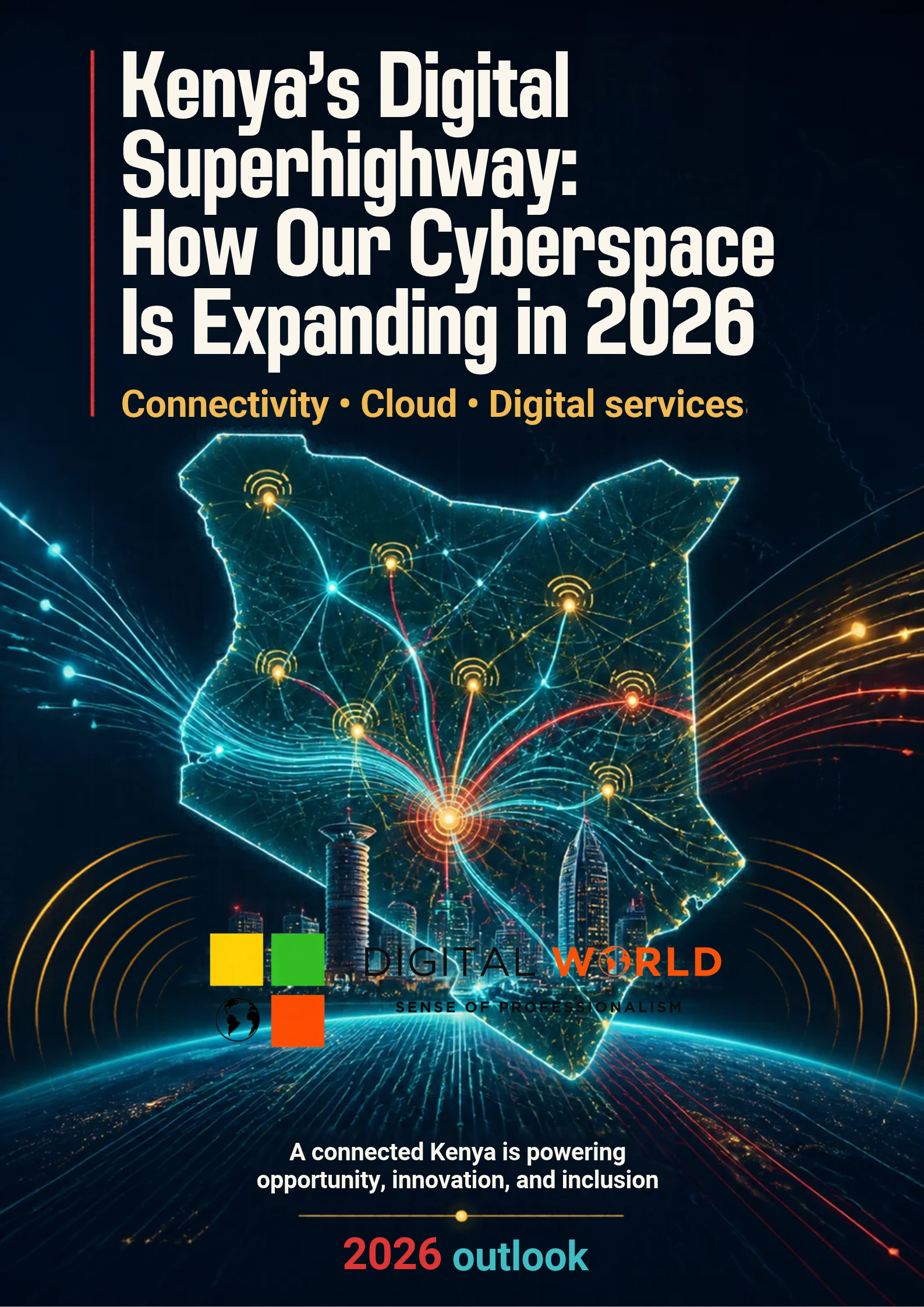
Kenya's Digital Superhighway: How Our Cyberspace Is Expanding in 2026
29
Oct
Kenya's cyberspace is growing faster than most businesses can keep up with. Fibre is being laid into more counties, public Wi-Fi is reaching smaller towns, and more Kenyans than ever are online, paying and shopping from their phones. At the centre of it all is the Digital Superhighway. Here is what is happening, and what it means if you run a business in Kenya.
88Mmobile subscriptions (June 2026) 165%mobile penetration 54Mmobile money subscriptions 100,000 kmfibre target
What is the Digital Superhighway?
The Digital Superhighway is Kenya's national plan to expand high-speed internet, move government services online and build the digital economy. Its headline goal is roughly 100,000 km of fibre-optic cable nationwide. Alongside it sit public Wi-Fi hotspots, community digital hubs and the Konza Technopolis. The World Bank-backed Kenya Digital Economy Acceleration Project (KDEAP) provides much of the financial and operational foundation.
The numbers behind Kenya's expanding cyberspace
The Communications Authority of Kenya's April–June 2026 report shows how quickly the base is growing:
- 88 million active mobile subscriptions by 30 June 2026, a penetration rate of 165%.
- 64.3 million mobile data subscriptions, up 9.7% in a year.
- 54 million mobile money subscriptions, up 13.2%.
- 2.84 million fixed internet subscriptions, up 32.4% year on year, with fibre at 1.57 million connections.
- Satellite internet subscriptions grew 54.4%, from a small base.
Fixed home and office internet is the quiet story. As fibre reaches more estates and towns, businesses can count on faster, more reliable customers and staff.
Fresh money for fibre, in October 2026
In mid-October 2026 the government announced an extra KSh13 billion (over US$100 million) meant to attract matching private investment. The target is at least 27,000 km of backbone, middle-mile and cross-border fibre. A further 17,000 km is planned to link schools, health facilities and government offices, which brings the new plan to about 44,000 km.
Reports differ on how much fibre is already in the ground. One report cites about 80,000 km laid since 2022, while the National Broadband Strategy has cited roughly 40,000 km. Whichever figure you use, the direction is clear: far more of Kenya is about to get connected.
The cross-border side is moving too. Kenya and Tanzania have launched the Dar es Salaam–Mombasa terrestrial fibre link, tying national networks across the border.
Last-mile connectivity: Wi-Fi and digital hubs
Backbone fibre only matters if it reaches people. The government is building last-mile links using existing Kenya Power infrastructure, public Wi-Fi hotspots (25,000 are planned) and digital hubs. A recent example is the Chepkorio Centre of Excellence Digital Hub in Keiyo South. These hubs aim to help young people and small businesses access online work and markets.
The challenges to watch
- Funding: the 2026/27 allocation for the Digital Superhighway is Sh8.6 billion, lower than in previous budgets, which is why private-sector co-investment matters.
- Cybersecurity: Kenya recorded a 29% rise in cyber threats to 11.12 billion in the latest quarterly report. A National Cybersecurity Policy is still being developed.
- Policy: the government is working on a Kenya AI and Emerging Technologies Policy, a National Data Governance Policy and the ICT Authority Bill.
- Affordability and skills: devices and digital skills remain barriers for many Kenyans.
What it means for your business
A bigger, faster cyberspace means more of your customers are online before they ever walk into your shop. To capture them:
- Have a fast, mobile-first website. Most Kenyans reach the internet on a phone, so design for phones first.
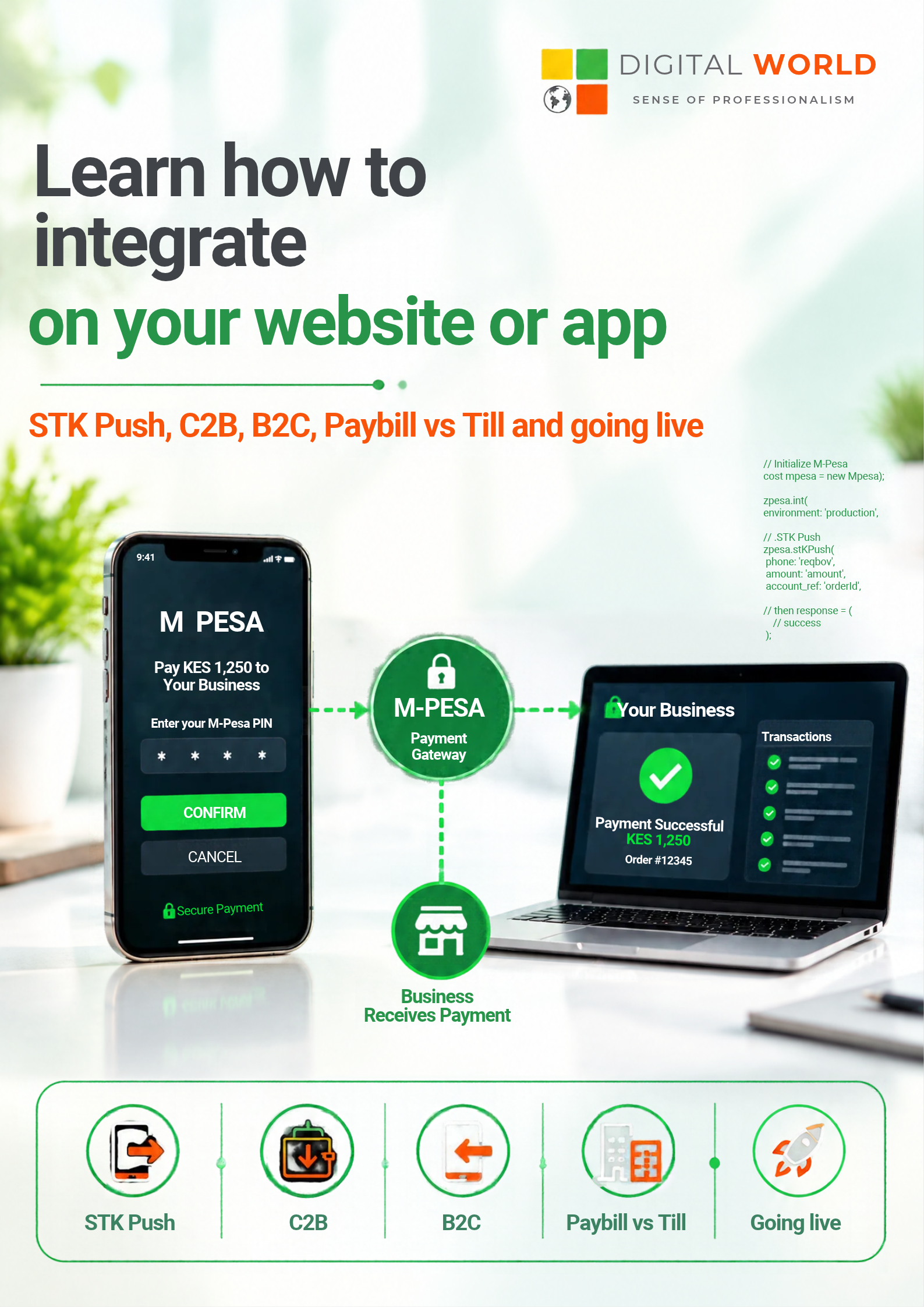
- Accept M-Pesa online. With 54 million mobile money subscriptions, payment on the website is not optional. See our guide to M-Pesa Daraja API STK Push integration.
- Be found. Search and social visibility decide who gets the new online customers. Read how to get your business found online in Kenya.
- Build an app where it pays. Repeat customers, delivery, bookings and field teams are strong cases for a mobile app.
- Secure everything. With threats rising, SSL, input validation, secure payments and regular backups should be standard.
Ready to get your business onto the Digital Superhighway?
Digital World Kenya builds websites, mobile apps and software, and runs digital marketing, all with M-Pesa built in.
Chat with us on WhatsApp: +254 790 412 453
Frequently asked questions
What is Kenya's Digital Superhighway?
A national programme to expand high-speed internet, digitise government services and grow the digital economy, with a target of about 100,000 km of fibre, public Wi-Fi and digital hubs.
How many mobile subscriptions does Kenya have?
The Communications Authority reports 88 million active mobile subscriptions at the end of June 2026, or 165% penetration. That is more than one SIM per person on average.
How can my business benefit?
Better connectivity brings more customers online. A fast website, M-Pesa payments, a mobile app and digital marketing let you reach them. Message us on WhatsApp to plan yours.
Sources
- Kenya's mobile subscriptions hit 88 million (Biznakenya, citing the Communications Authority)
- Mobile subscriptions rise to 88 million (Techweez)
- Kenya avails $100m to accelerate Digital Superhighway (ITWeb, 14 Oct 2026)
- Kenya plans 44,000km fiber rollout (Kenya Today, 28 Oct 2026)
- Kenya's ICT budget falls despite Digital Superhighway push (TechTrendsKE)
- Digital Superhighway legislative push (TechAfrica News)
- Public Wi-Fi rollout in Keiyo South (TechAfrica News)
- ICT Authority Kenya